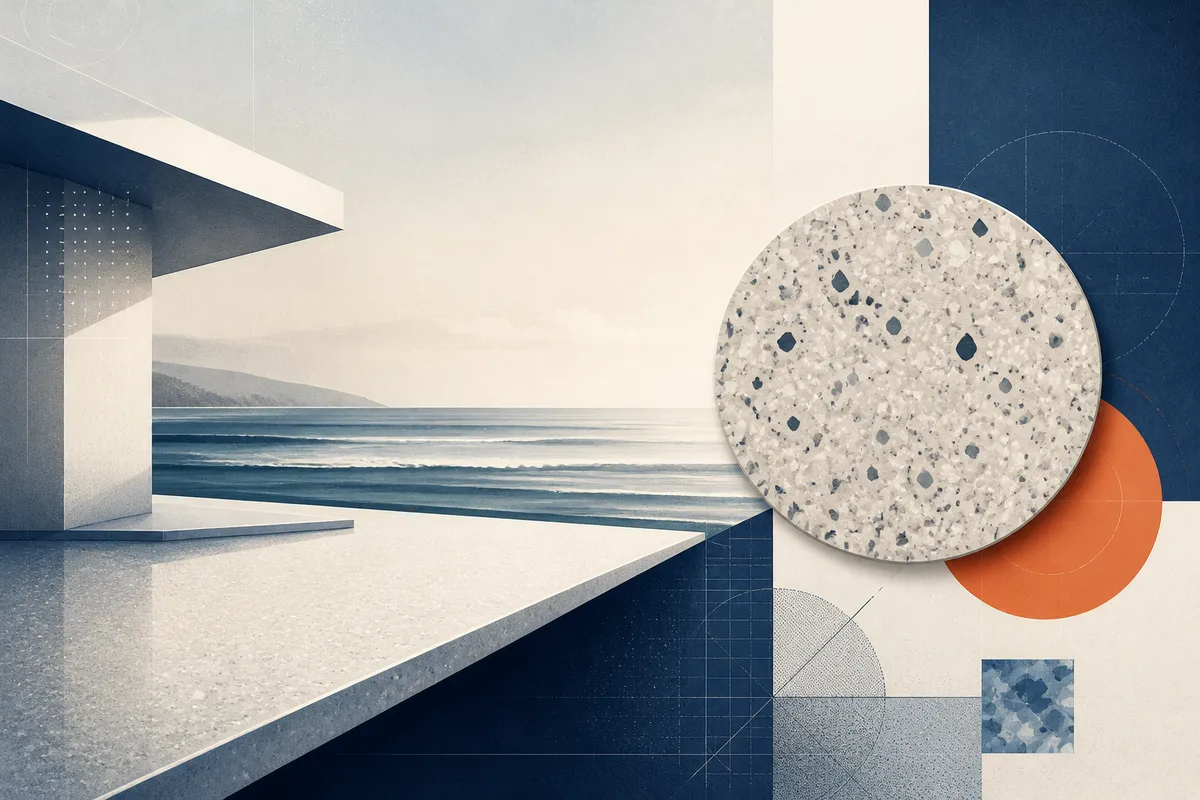
Choosing Vinyl Chip Blends for Coastal Architecture
Homeowners often view the garage floor as an isolated utility surface, yet it represents the largest singular visual plane when the door is raised. In South Tampa, where curb appeal is a significant driver of aesthetics, a mismatch between a home’s exterior and a generic, dark garage coating creates a jarring visual break. The transition from the driveway to the garage should feel like an intentional architectural extension, not a utility afterthought.
Selecting the right garage floor flake colors involves more than picking a favorite shade; it requires an understanding of how light, regional debris, and exterior paint palettes interact. Matching your exterior home colors with garage floor coatings ensures the floor remains functional and aesthetically cohesive for years.
Why Standard Flake Selection Fails in Florida
Many homeowners select a blend based on a small sample swatch without considering the unique environmental factors of the Gulf Coast. A color that looks clean in a showroom often fails in a driveway-adjacent environment for several reasons:
- Darker blends absorb significant heat in the Florida sun, which can make the garage space uncomfortable during peak summer months.
- High-gloss monochromatic floors show every grain of light-colored sand and salt tracked in from the coast.
- Warm-toned stucco exteriors often clash with the blue-heavy "industrial grey" chips commonly found in big-box DIY kits.
- Overly uniform patterns fail to disguise the hairline settlement cracks that naturally occur in Florida’s sandy soil.
The Framework for Coastal Color Alignment
Creating a cohesive look requires a systematic approach to color theory and regional environmental demands. Follow this progression to move from a utility floor to a designed architectural element.
1Identify the Exterior Undertones
Before looking at flake swatches, identify if your home’s exterior paint is warm or cool. Stucco frequently features "Tan" or "Beige" bases that require a tan-brown-black combo to avoid a visual clash. If the home features modern cool-grey siding, a gray-black-white mix or a blend with blue scattered through a neutral base provides the necessary continuity, as suggested by epoxy flake color palettes.
2Match the Density to the Use Case
The density of the flake distribution—whether it is a partial broadcast or a full-spread broadcast—changes the perceived color. A full-spread broadcast creates a textured, stone-like appearance that is essential for masking the imperfections often found in Flake Floor Coatings applied over repaired concrete. This high-density approach is a standard for high-traffic coastal homes.
3Account for Environmental Debris
In areas like South Tampa, floors are subject to limestone dust and light-colored sand. Selecting a flake blend that incorporates off-white, cream, or light tan chips allows these particles to blend into the floor pattern rather than standing out as dirt. Light gray, tan, and coastal blue tones are often recommended for Fort Myers and coastal homes to maintain a clean appearance.
4Bridge the Gap to Outdoor Living
Florida homes often feature a seamless flow between the garage, the side entry, and the lanai. Color flakes resinous flooring media is available in over 150 solid color-styles and can be blended, mixed, and matched to bridge these gaps. A neutral chip blend allows for a professional finish that complements pool decks and patios without competing for attention with the landscaping or water features.
Managing Mold and Moisture Impact on Color
In the humid climate of the Tampa Bay area, moisture management is as critical as color selection. According to the Florida Department of Health, mold growth is a common concern in damp indoor environments. When selecting garage floor flake colors, it is vital to choose a high-density vinyl chip pattern that does not mimic the appearance of biological growth.
A multi-tonal grey or tan blend provides a "clean" visual benchmark. If a floor is too mottled with organic greens or dark browns, it becomes difficult to distinguish between the decorative chip and potential mold growth resulting from moisture issues. The goal is a variegated surface that highlights the cleanliness of the space while hiding the minor dust of daily life.
How Epoxy Garage Floor Tampa Helps
Executing a professional floor renovation involves rigorous concrete preparation and precise color blending. A typical scope of work begins with mechanical concrete grinding to achieve a specific surface profile, followed by the repair of any structural fissures. When selecting a palette for a South Tampa Service Area property, the focus remains on ensuring the base coat and flake density are sufficient to withstand local humidity and UV exposure.
Frequently asked questions
Will light-colored flake blends yellow over time in the Florida sun?
Yellowing is generally a function of the resin choice rather than the flake color itself. UV-stable polyaspartic topcoats are often paired with light tones to help maintain the floor's appearance and prevent yellowing from sun exposure.
How do I choose a color that hides the tire marks common in Tampa summers?
"Hot tire pick-up" is a physical failure, but visual tire marks are often just carbon transfer. Choosing a medium-toned blend—such as a mix of greys, blacks, and whites—masks these marks much better than a very light or very dark solid floor.
Can I mix metallic epoxy floor designs with vinyl chips?
While technically possible, these are usually distinct systems. Metallic floors offer a marbled, high-gloss aesthetic, while vinyl chip patterns are frequently used in residential garages for their ability to hide imperfections and provide a variegated texture.
Does the City of Tampa have specific color requirements for garage floors?
There are no general municipal color codes for residential garage interiors. Owners should consult their specific Homeowners Association (HOA) for any community-specific restrictions regarding exterior-facing colors or visible finishes.
How do I maintain the color vibrancy of my flake floor?
The color is protected by a clear wear layer, so maintenance involves removing abrasive sand that can dull the finish. Regular cleaning with a pH-neutral solution and a soft squeegee will keep the flake colors looking sharp.
Should my garage floor match my driveway or my house?
The most successful designs treat the garage floor as a bridge. It should complement the primary house color (the stucco or siding) while providing enough contrast to the driveway to clearly define the entrance to the home.
What happens when you get in touch: you describe the situation, we ask the few questions that actually change the answer, and you get a clear scope and next step — no obligation.
Ready to move on this?
Pick the path that matches where you are today — the Epoxy Garage Floor Tampa team can take it from there.